
Data-driven mechanical assessment for a technology campus building
San Francisco Bay Area · 79,000 sq ft office, lab and production building. 3.66 million BAS readings, four drawing sets and a full field survey turned into nine energy savings measures, a maintenance finding that looked like a controls problem, and a roadmap the owner can act on.
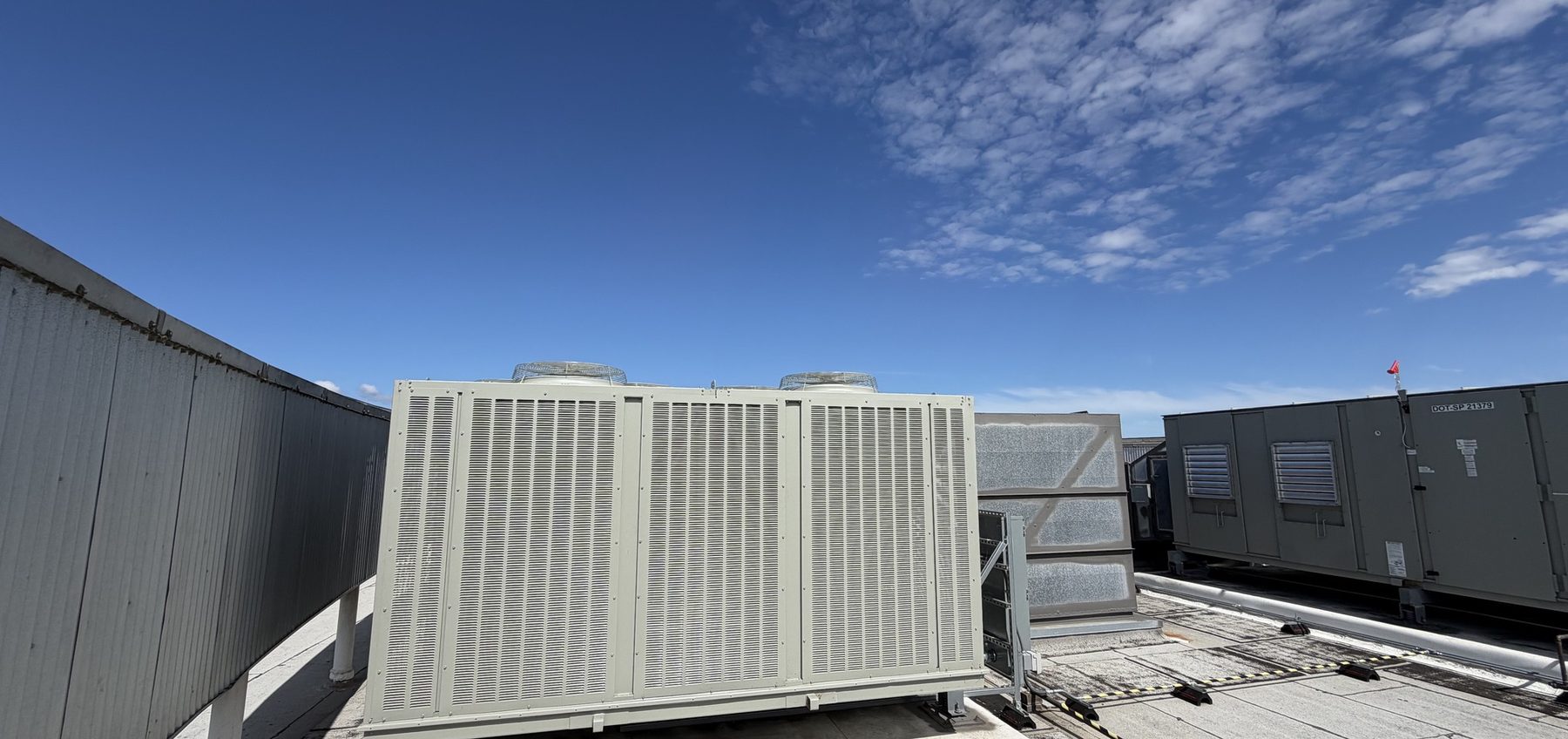
A modern BAS that nobody was reading.
The building has a modern automation system and mostly sound equipment: two 50-ton rooftop units, VAV with hot-water reheat, two gas boilers, a condenser-water loop for critical rooms, and resets, VFDs and economizers already programmed. What it lacked was anyone looking at what the system was recording.
EverWatt built the assessment from the building's own record — two BAS trend exports covering February to June 2026, 3,662,739 five-minute readings across 152 points, screened point by point and aligned in time — plus four drawing sets reconciled against the installed equipment and a field survey that verified fourteen major equipment tags by nameplate. The findings only appear when independent points are compared at the same instant.
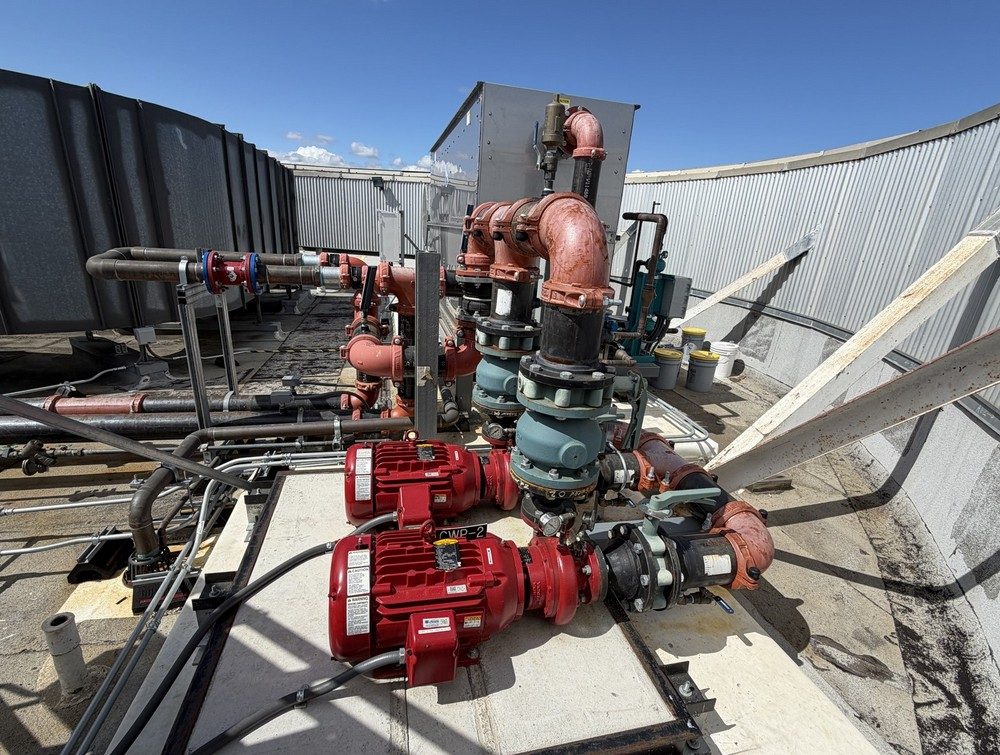
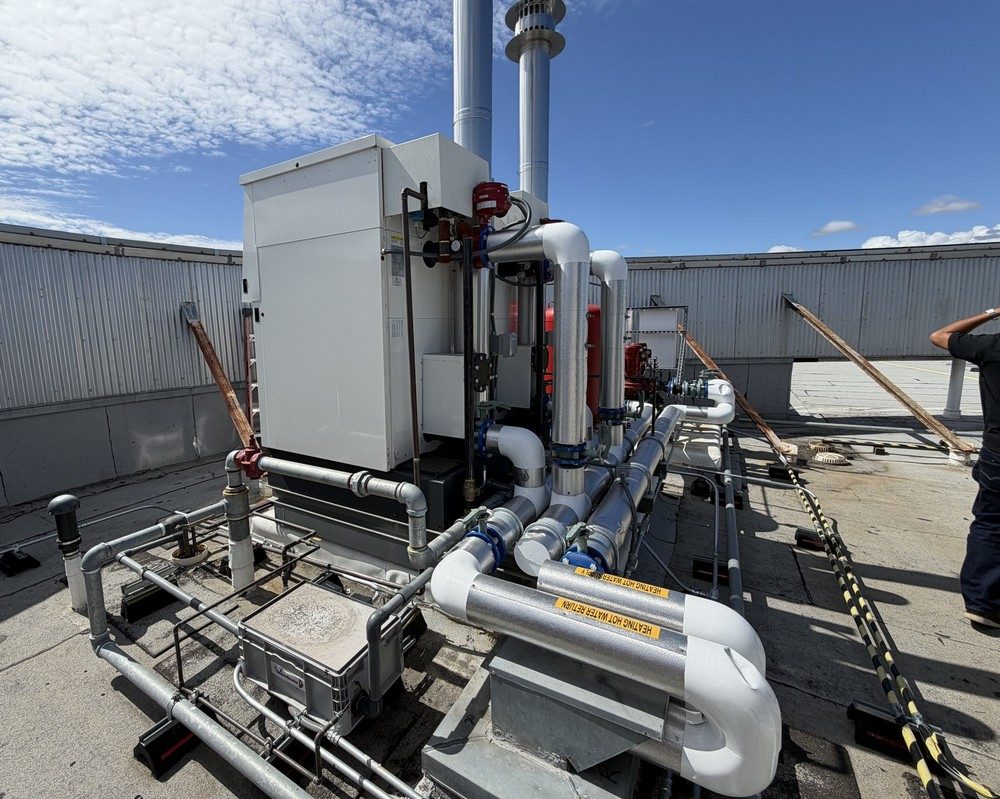
Condenser-water pumps and the heating hot water plant, roof level. Field survey, 2026.
The fans ran, the building was comfortable, and the dampers were closed.
Relief dampers that never opened
On AC-1 the relief damper read 0% in all 14,222 samples over 49 days while the supply fan ran 46% of the time. A life-safety and energy issue with no symptom anyone would notice from the floor.
A boiler plant that couldn't be measured
Both firing-rate points read zero for the whole record. The plant had been operating for as long as the record shows with no way to know what it was burning.
A controls symptom that wasn't
Simultaneous heating and cooling — the classic signature of a controls problem. The sequences already contained the reheat lockout EverWatt would have proposed. The valves weren't following them. Reported as maintenance, held out of the savings.
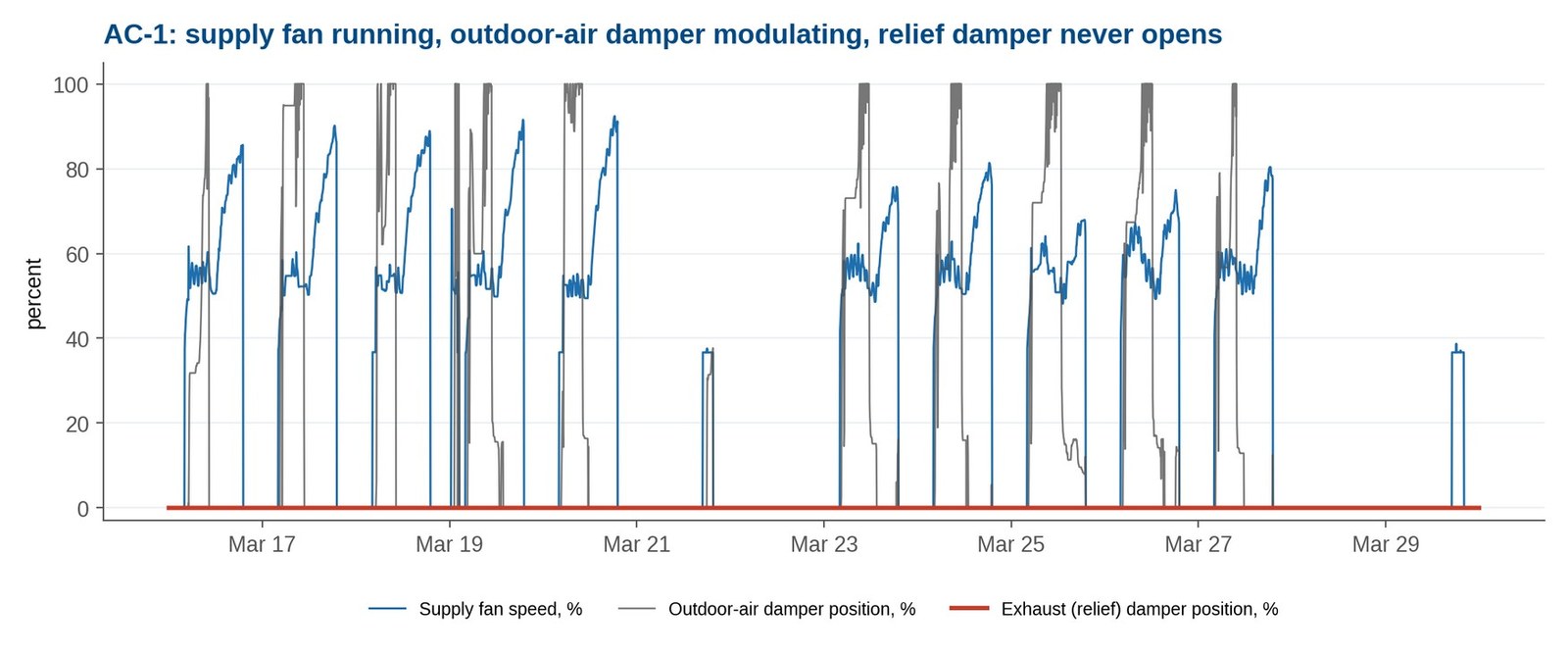
AC-1, two weeks of five-minute data: supply fan (blue) and outdoor-air damper modulating; relief damper (red) flat at 0%. Relief air had no path while the fan ran.
Every measure traces to a finding in the data.
Seven operational and controls measures are counted. Two capital measures — heat pump heating fed by the condenser loop, and expanded critical cooling — go to feasibility study rather than into the savings total, because the assessment didn't have the data to count them and wouldn't pretend to.
| System | What the data showed | What EverWatt did |
|---|---|---|
| Rooftop unit relief dampers | AC-1 relief damper read 0% open in all 14,222 samples over 49 days while the supply fan ran; AC-2 at 0% in 88% of samples. Relief fans running against closed dampers. | Relief fan operation interlocked to verified damper position; fault-detection rule to flag a fan running with the damper closed. |
| VAV terminal reheat | Trends flagged simultaneous heating and cooling. Zone 1-04 averaged 66.8 °F against a 72 °F setpoint with the reheat valve 53% open. | Sequences checked and found correct; the valves weren't responding. Reclassified as a maintenance correction and held out of the savings total. |
| Heating hot water plant | Both boiler firing-rate points read zero for the entire 25,181-sample record. Boiler energy could not be trended. | Restore the plant points first, then optimize enable, reset and staging with measured data. |
| Condenser-water loop | Active pump held at a constant 70% command; loop ΔT averaged 5.6 °F against a 15 °F design target. Capped branches on three floors reserved for future loads. | Variable-flow pump control on ΔT; reserve capacity documented as a platform for future critical cooling. |
| Kitchen ventilation | Exhaust and makeup air at full flow through all kitchen hours regardless of cooking activity. | Demand-based ventilation control. |
| Airside scheduling and resets | Supply-air temperature and static-pressure resets in place but not tuned; economizer operation and occupancy schedules not verified. | Reset tuning, economizer verification and schedule refinement on both rooftop units. |
| Capital opportunities | Gas-fired heating plant and a condenser-water loop with reserve capacity, side by side. | Heat pump heating with heat recovery from the condenser loop, and expanded critical cooling — taken to feasibility study rather than counted. |
Count what the data supports.
Sequenced for the owner
Operational improvements that cost little and start now; control-system enhancements that need BAS programming; mechanical capital improvements that need feasibility studies; future study items.
Trend expansion and FDD first
Each operational measure carries a list of points to log before final savings are fixed. Fault-detection rules recommended so the relief-damper, boiler-point and reheat conditions are caught automatically next time.
Verified at the meter
Savings will be verified at the utility meter after implementation. Developed to Investor Confidence Project protocols; utility rebates and incentives scoped per measure under custom and deemed pathways.
Have a BAS full of data nobody reads?
We'll read it. Two trend exports and a site walk are usually enough to find what a year of comfortable operation has been hiding.
or call (510) 730-0062