Steam heating automation for a 1907 office tower
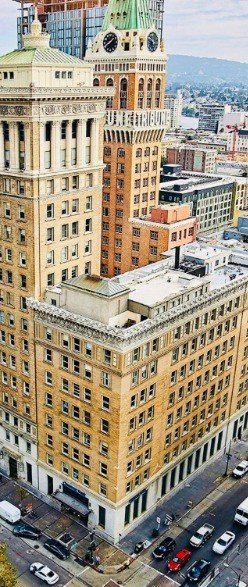
1212 Broadway, downtown Oakland · 18 stories · 123,710 sq ft. DDC control of the original steam boiler, thermostatic radiator valves and zone monitoring. Boiler and every radiator retained. Installed with the building occupied; savings verified at the meter at 90 and 180 days.
A plant operated by hand, heating floors it couldn't see.
Built in 1907 and renovated in 1986, the tower is heated by a single steam boiler: a steam-to-hot-water converter serves floors 1–3 and direct steam radiators heat floors 4–18. In 2023 the boiler used about 48,000 therms. The equipment was serviceable. The problem was how it was run — staff switched it on and off each day, most radiators had manual valves, and the plant had no information about the floors it was heating. Tenants overheated and opened windows in winter.
EverWatt logged steam temperature and burner amperage alongside outside-air temperature and built a bin-hour model calibrated to the utility bills. It showed the boiler running roughly 17 hours a weekday against a stated 10. Controls alone could remove 44% of the gas — without touching the boiler or a single radiator.
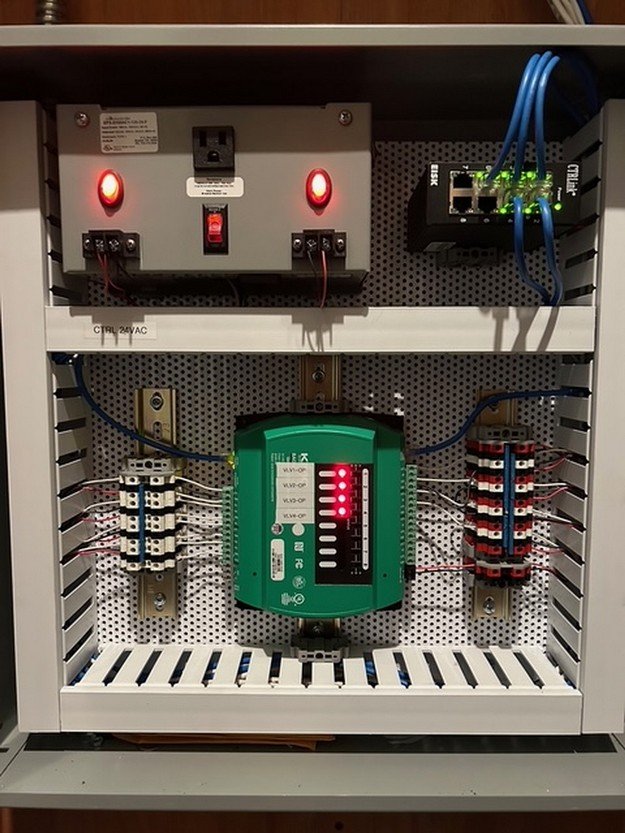
The DDC control panel at the boiler, October 2025; the tower from Broadway.
Forty-four percent of the gas came out without changing a piece of heating equipment.
The boiler stayed
A replacement would have cost more, saved less, and still heated empty rooms. A DDC controller turned a hand-operated plant into a scheduled one, enabled on outside air and zone demand.
The radiators stayed
Thermostatic radiator valves handle the room-by-room limit. BMS-controlled valves on selected zones give the plant feedback it never had.
No repiping an occupied tower
Steam systems of this age are often assumed to need a full hot-water conversion. This project shows the alternative, and avoided the disruption entirely.
Every measure traces to a finding.
| System | What the survey found | What EverWatt did |
|---|---|---|
| Boiler operation | Staff switched the boiler on and off by hand on a nominal 8-to-5 weekday schedule. Logged steam temperature and burner amperage showed it running well past hours and at times around the clock — about 3,200 effective hours a year against a stated 2,600. | DDC control of the boiler: scheduled operation, enable and setpoint driven by outside-air temperature and zone demand, remote monitoring and alarms. |
| Radiator valves | Most radiators still on their original manual valves, delivering heat regardless of occupancy or room temperature. | Remaining manual valves replaced with thermostatic radiator valves so each radiator limits itself to the room's setpoint. |
| Zone feedback | The plant had no information from the floors it served. Overheating complaints were common; tenants opened windows in winter. | Selected zones fitted with BMS-controlled valves and thermostats; zone temperatures monitored and trended so the boiler responds to what the building needs. |
| Occupancy | About 35% of the floor area was occupied, but the radiators heated the whole building. | Zone control and thermostatic valves stop heat delivery to spaces that don't need it. |
Verification didn't wait for a year.
$250K in utility funding
Rebates, incentives and zero-interest on-bill financing over six years, secured by EverWatt before construction.
Tracked at 90, 180, 270 days and one year
Against the 2023 baseline. 90 days: $17,701. 180 days: $36,210 — on track for the $42,562 annual estimate, even after two weeks in December when staff overrode the boiler to run continuously. Both anomalies were visible in the trends, which is the point of having them.
Commissioned to ICP
Developed, commissioned and verified to Investor Confidence Project protocols: pre-functional checklists, functional performance tests, O&M documentation and owner training. Acceptance tied to demonstrated performance, not installation.
Have a boiler someone turns on by hand?
Older steam and hot-water plants are usually the cheapest savings in the building. A logger study tells you how much before you spend anything.
or call (510) 730-0062