Building automation and HVAC optimization for a manufacturing headquarters
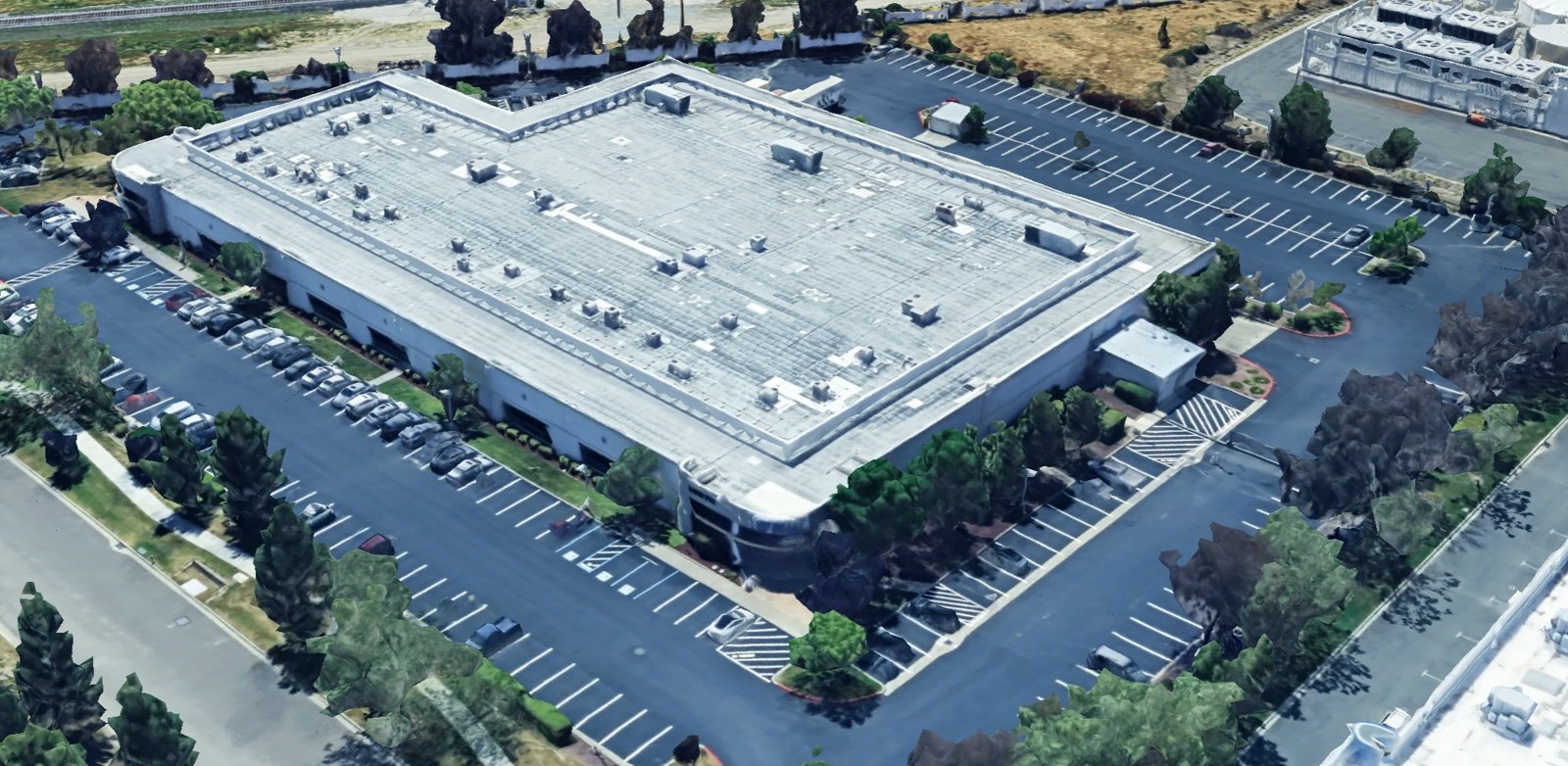
Smart Modular Technologies · Newark, California · 79,194 sq ft. A complete building automation system where none existed, HVAC optimization with drives and economizer control, and an LED conversion with controls — designed, funded, built and verified by EverWatt with the facility in production.
Sound equipment. No system telling it what to do.
The building used about 2.27 million kWh a year with a 487 kW peak and had no building automation system. Three 50-ton constant-volume rooftop units served the humidity-controlled production floor on fixed outside-air dampers and basic thermostats — one of them with no working mechanical cooling. Two server-room units ran continuously with no lead/lag. Lighting was fluorescent and halogen on wall switches.
EverWatt's investment-grade audit began with three weeks of HVAC logging in December 2024. A company-wide holiday shutdown compromised that data, so rather than model from a dataset it didn't trust, EverWatt re-logged the building in early 2025. The second dataset — fan status, supply temperatures, damper positions, compressor staging, humidity behavior and schedules — is what the savings model was built on.
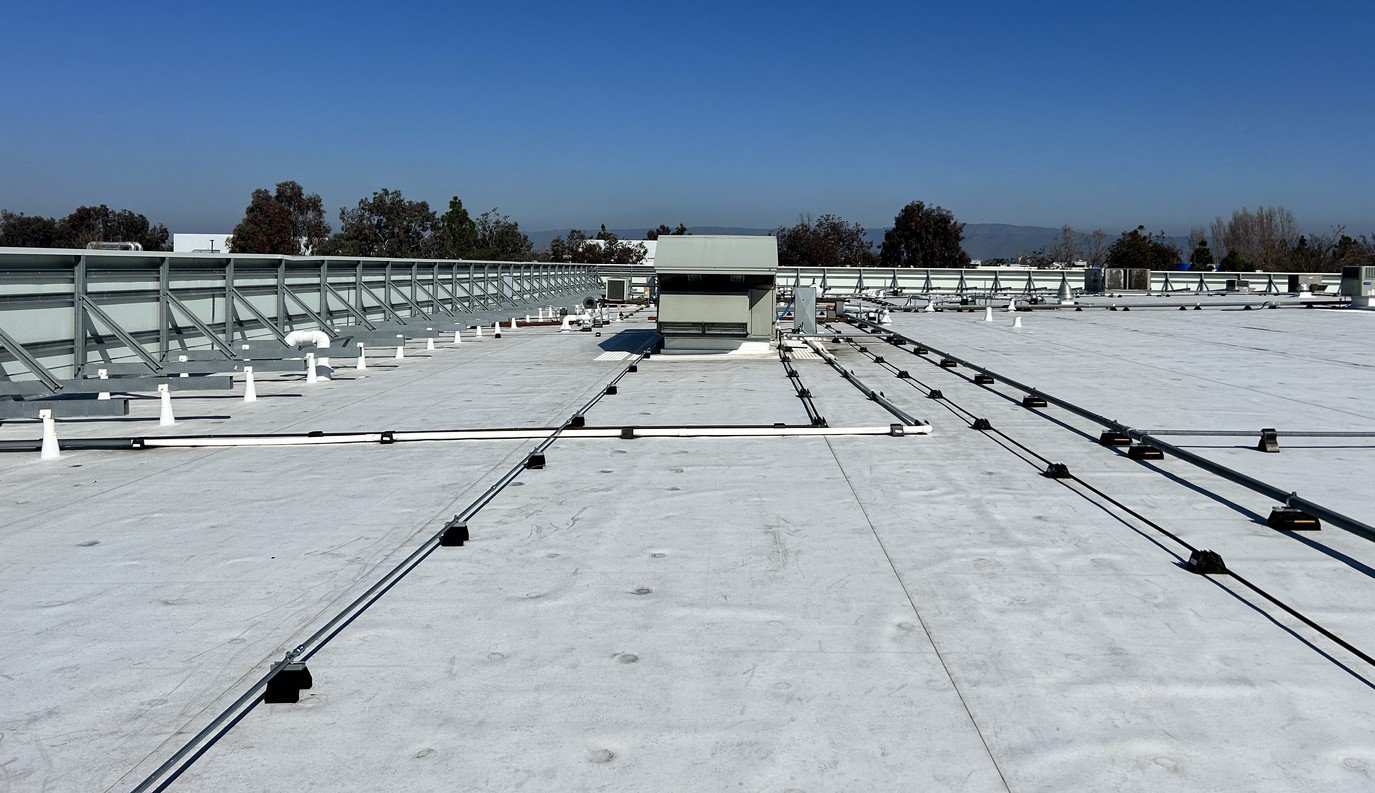
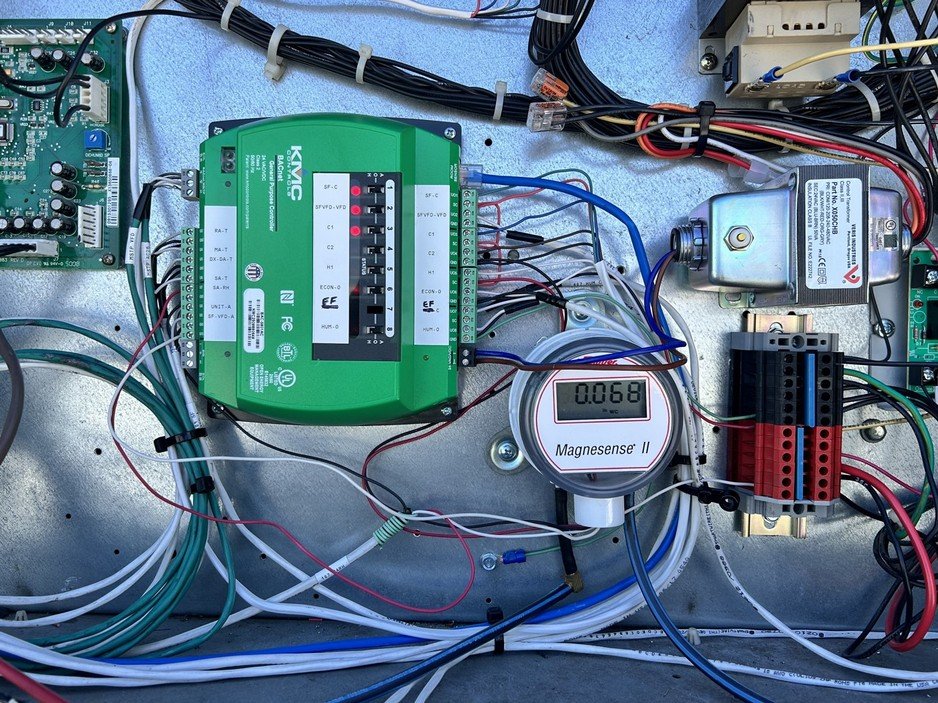
Rooftop conduit to the production units; the new building automation panel, May 2026.
Excess energy came from the absence of control, not the condition of the equipment.
Fixed outside-air dampers
The 50-ton production units brought in cold air that had to be heated and hot air that had to be cooled — the same damper position in every season.
A unit with no cooling
AC-25 had no working mechanical cooling. AC-24 and AC-26 had been quietly carrying its load for years.
Leaking economizers
Dampers and linkages didn't stroke properly, so free cooling wasn't available even when the outside air was right.
Uncoordinated humidity
Three humidifiers, each running to its own setpoint, fighting each other across one production floor.
Server room on 24/7
Two 7.5-ton units running continuously with no lead/lag sequencing.
Vacant space
Most of the smaller rooftop units served empty office areas in auto mode — deliberately excluded so the savings would hold at the meter.
Every measure traces to a finding.
A complete BAS from the ground up — server, operator workstation, unit controllers, sensors and current transducers, a network to the customer's IT for remote access, trending and alarming on every point — then the optimization sequences written on top of it. No rooftop unit was replaced. Repairs came first, because controls can't save energy on equipment that doesn't respond to them.
| System | What the audit found | What EverWatt did |
|---|---|---|
| Production units AC-24 & AC-26 · 50 tons each | Constant volume. Outside-air damper fixed in one position regardless of weather; no central control. | DDC on each unit; dampers to minimum OA in cold and hot weather, open for free cooling between; mechanical cooling only when outside air can't meet load; VFD on each supply fan. |
| Production unit AC-25 · 50 tons | Economizer cycling rapidly in cool weather. No mechanical cooling at all — the other two units were carrying its load. | Unit-level control of setpoints, staging and dampers; VFD on the supply fan; cooling fault diagnosed and repaired so it carries its own load. |
| Production humidification | Three humidifiers, one per unit, each chasing its own local setpoint. | Humidity coordinated across the three units through the DDC system. |
| Server room AC-31 & AC-32 · 7.5 tons | Both units running continuously, no lead/lag. | Lead/lag sequencing — one carries the load, the second cycles in on demand. |
| Interior & exterior lighting | Fluorescent and halogen on wall switches; no occupancy or daylight control; long production runtimes. | Full LED conversion with controls and sensors: panels, wraps, tube retrofits, downlights. |
| Remaining rooftop units | Serving vacant office areas in auto mode; little savings available. | Left as found — low-return equipment excluded so the project stays measurable at the meter. |
Zero out of pocket. Confirmed by the utility. Measured at the meter.
$575K+ in utility funding
Rebates, incentives and zero-interest on-bill financing, secured through the program's above-cap exception. The customer paid nothing up front.
Utility-confirmed savings
The utility's engineers reviewed and confirmed the savings claim for every measure. Before that review EverWatt re-ran the production-unit savings against post-installation trends and adjusted the baseline for increased production — so the reported number is the one the meter supports.
NMEC meter-based verification
A time-of-week and temperature model fitted to twelve months of pre-installation interval data; performance period April 2026 to April 2027; monthly reports, weather-normalized. Commissioned to Investor Confidence Project protocols.
Running a facility on thermostats and wall switches?
Two rounds of logging, a savings model the utility will sign, and a building automation system that pays for itself. Tell us about the building.
or call (510) 730-0062